
By Gladys Narvaez September 9, 2026
Your team just lost a warm lead. Not because your pitch was weak. Because nobody claimed the meeting fast enough, and the prospect booked a demo with a competitor instead. Scheduling slip-ups like this cost real revenue every single day. And most of the time, the fix comes down to one decision: how you route meetings across your team.
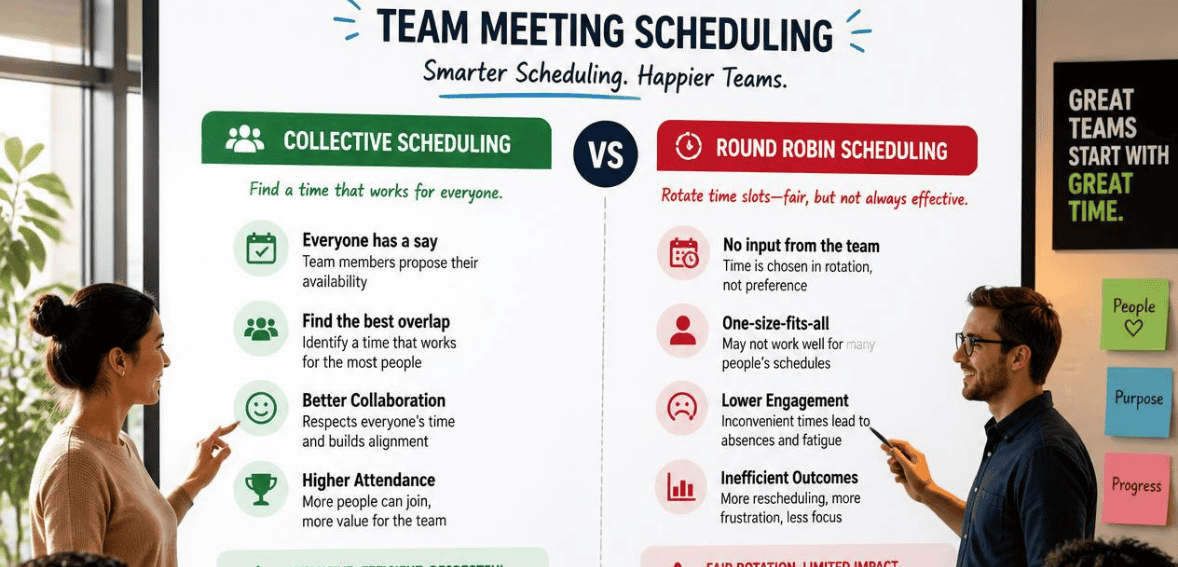
Let’s look at the main issue of modern-day team scheduling: collective scheduling versus round robin. These methods can tackle different problems. Choosing the wrong method means either sending a one-on-one meeting to an overloaded teammate or creating an unnecessary meeting with five participants. Choosing the right method automatically books meetings while keeping your team nimble and balanced.
This guide simplifies the two methods, Collective Scheduling vs Round Robin, and will tell you how and when to use each method, which tools can implement each method, and how to use a combination of the two for best effect.
What Is Collective Scheduling?
Collective scheduling books one meeting with several team members at the same time. Every named host joins the same call. The system pools everyone’s calendars and shows the invitee only the time slots where all required hosts are free.
Imagine a sales demonstration that requires both a sales engineer and a sales executive. Or a hiring panel that consists of three interviewers who must meet with the same candidate at the same time. Collective scheduling highlights the narrow time that works for everyone and sets a single booking for that time.
The main advantage here is bringing people together. When a meeting requires multiple people who are experts in that field, collective scheduling makes sure that the right people are in the right meeting at the right time. No one goes back and forth on availability. No one has to forward the meeting invite five times. The only drawback is availability. Since everyone in the meeting has to be available at the same time, time slots get booked very quickly the larger the group gets.
What Is Round Robin Scheduling?
Round robin scheduling takes the opposite approach. Instead of gathering everyone, it assigns each new booking to one team member, rotating through the group in turn. The next request goes to the next available person, and the cycle repeats.
The name describes a tournament situation in which each player faces every other player in order. In this case, it describes a virtual carousel of hosts. One participant takes a meeting, then the next takes the meeting, and so on. This system works by checking each participant’s calendar in real time to ensure no one gets booked for more than one meeting.
Round robin works best when the meeting can be handled by any qualified teammate. Inbound sales, support, and discovery calls are some meeting types this works best for. The system is designed to work for the fairest and best distribution possible to minimize the time it takes to accomplish any work, not to fill a meeting. The system books only the one available member of the team, so as the team grows, the system continues to work well to keep scheduling events.
Collective Scheduling vs Round Robin: The Core Difference
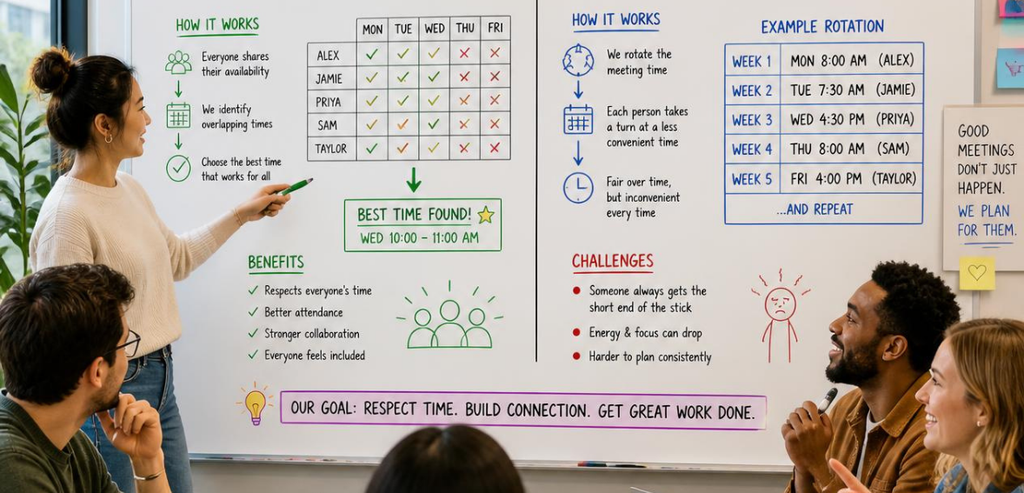
Here’s the simplest way to remember it. Collective scheduling is about presence: getting several specific people into one meeting. Round robin scheduling is about distribution: spreading many meetings fairly across a team, one host at a time.
Collective events answer the question, “When can all of us meet this person?” Round robin events answer, “Who should take this next meeting?” One optimizes for shared attendance. The other optimizes for balanced workload and fast response.
When to Use Collective Scheduling
Use collective scheduling to set up meetings where more than one participant is required. For example, a software demonstration may require one participant to bring sales and another to bring technical expertise. Similarly, recruiting panels and quarterly account reviews also require multiple participants to contribute to varied aspects of the review.
For all of these scenarios, meetings will be more valuable with the specific combination of participants. Conversations that require multiple participants cannot be broken up into separate meetings because it will impede the progress of the deal or decision. Collective scheduling is the prompt way to find a time convenient to all participants.
When to Use Round Robin Scheduling
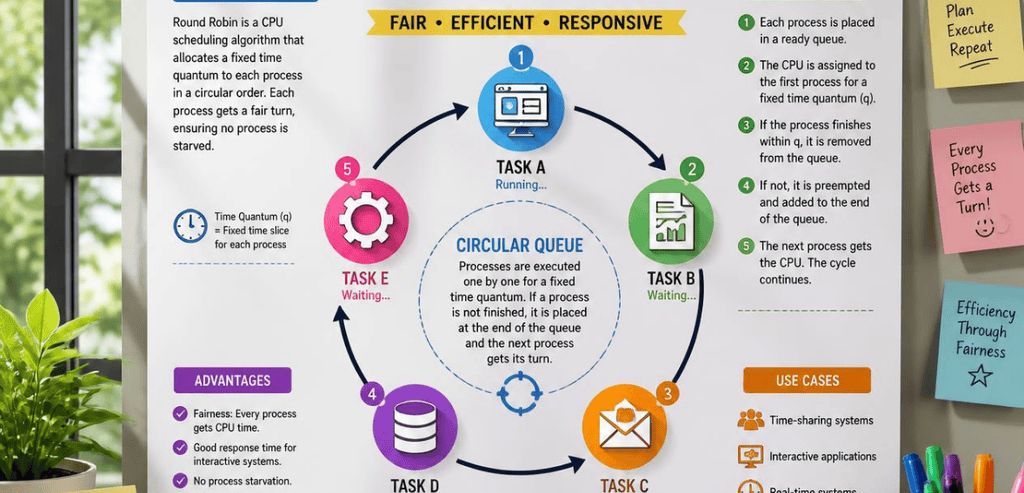
Choose round robin scheduling when the meeting can go to any capable teammate and speed matters more than a specific person. Inbound lead routing is the top use case. A prospect fills out a form, clicks a booking link, and lands on the calendar of whichever rep is next in rotation. No manager assigns it by hand. No lead sits waiting for hours.
That speed is no trivial advantage. Inbound sales research shows that the sales team that responds first wins a large portion of the sales deals. Conversions will increase when you reduce the response time from hours to minutes. Round robin also protects your resources. It prevents your top sales rep from being overloaded with meetings while an underutilized employee is left with nothing to do, which helps keep employee burnout low and morale high. The same automated and fair rotation is helpful for customer support queues, appointment intake, and most internal meetings.
It is worth mentioning again that round robin should not be applied in all situations. A strategic high-value sales account should be assigned to a senior sales rep, rather than being included in the same rotation as a low-intent content download. The most effective teams filter leads, and after that, they implement round robin within the filtered leads.
Popular Tools for Collective and Round Robin Scheduling
Most modern scheduling platforms support both methods, often side by side. Here are three widely used options for teams in the United States.
Calendly
Calendly caters to both approaches with specific event types. With Collective, multiple hosts can meet one invitee and will show only the times that all selected hosts are available. Round Robin event type will assign one-on-one meetings to members based on availability or the assignment rules you set. It’s even possible to combine the two and have round-robin hosts as well as guaranteed hosts, which is useful for panel interviews.
Cal.com
Cal.com is open-source software that focuses on creating solutions for team routing. It distinguishes hosts as either fixed (attend all meetings) or round-robin (take turns). Because of this design, it allows for integration of both collective and round-robin behaviors at the same time for one event. It also allows routing meetings based on rules, so for example, meetings can be booked depending on the attendee’s region, company size, or language.
Reclaim.ai
Reclaim.ai is centered on intelligent automation of calendar management. They think of round robin as a method for balancing meeting bookings so that no one team member’s calendar fills up the most. When a booking is made on a round robin link, the next free host is assigned. Reclaim works on maximizing availability with chunks of free calendar time across team members, coupled with their defragmenting calendar system.
How to Choose Between Collective Scheduling vs Round Robin
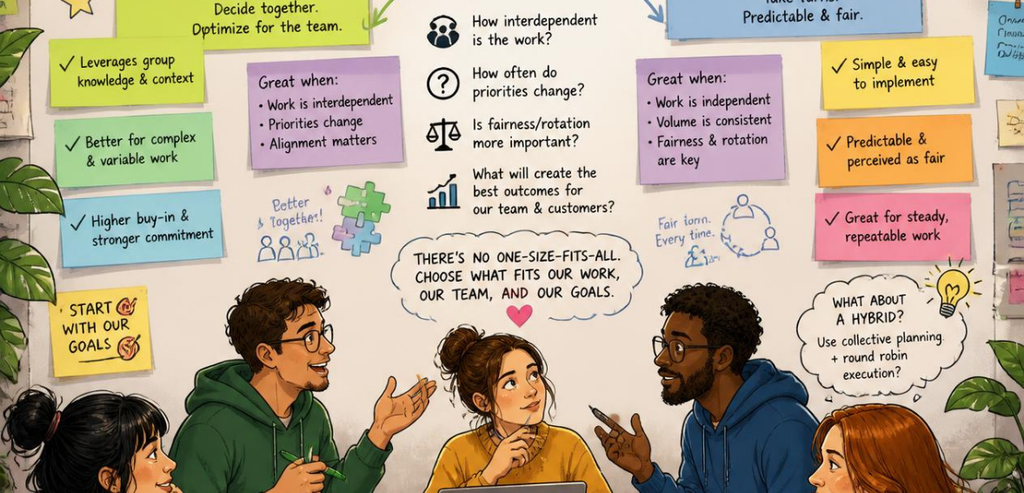
Start with a single question about the meeting itself: does it need specific people together, or can any qualified person take it? If the answer points to a fixed set of experts who must all attend, collective scheduling is your method. If any teammate in a pool can deliver the same result, round robin wins.
Next, consider availability and attendance. With collective scheduling, open time slots are minimized because all hosts need to be simultaneously available, meaning that this method is suited for sparsely scheduled, high-stakes meetings. Conversely, round robin maintains a wide array of scheduling options and is optimal for a high volume of meetings, making it ideal for a constant, incoming schedule.
Finally, consider workload and equity. Round robin is effective for the equitable distribution of meeting assignments to avoid the build-up of resentment for the unequal assignment of meetings, most evident when one participant is inexplicably assigned to all of the recurring meetings. It is important to note that unequal assignment should not be avoided for meetings that depend on a particular combination of skills.
Can You Combine Collective Scheduling and Round Robin?
Yes, because that is just how the best teams work. The two methods aren’t rivals; they are just different tools for different jobs. A popular hybrid system uses a form to route requests to the proper method along different paths.
Think of a funnel with small business leads that get distributed to a pool of sales reps to do fast discovery calls. On the flip side, enterprise leads are distributed to a group of higher-level executives to conduct a prepared sales demo. Blending the two ensures that most leads are served while giving special attention to more complex and valuable enterprise leads.
Conclusion
The collective scheduling vs round robin question really comes down to purpose. Collective scheduling gathers the right people into one room at one time, which is exactly what panels, demos, and reviews demand. Round robin scheduling spreads meetings fairly and quickly across a team, which is exactly what inbound sales, support, and intake demand.
Neither method is better in the abstract. The winner is whichever one matches the meeting in front of you. Better still, you rarely have to choose forever. Modern tools like Calendly, Cal.com, and Reclaim.ai let you run both, sometimes within a single workflow. Map your meeting types, pick the method that fits each one, and let automation handle the calendar chaos so your team can focus on the conversations that actually move the needle.
Frequently Asked Questions (FAQs)
Is round robin scheduling the same as collective scheduling?
No. Round robin assigns each booking to one team member and rotates through the group, so a different person owns each meeting. Collective scheduling books the same meeting with several hosts at once, so everyone named joins the same call. One distributes meetings; the other gathers people.
Which is better for a sales team?
It depends on the stage. Most sales teams use round robin for initial inbound and discovery calls, since any rep can handle them and speed matters. They switch to collective scheduling for complex, multi-stakeholder demos that need both a salesperson and a technical expert in the room.
Does collective scheduling reduce my available meeting times?
Yes, and that is expected. Because every host must be free at the same moment, open slots shrink as you add more required attendees. That is the trade-off for guaranteeing the whole group shows up together. Round robin keeps slots wider because only one host needs to be available.
Can small teams use round robin scheduling?
Absolutely. Round robin works for teams of any size, from a two-person support desk to a large enterprise sales floor. As long as each host keeps an accurate calendar, the rotation fairly spreads meetings and prevents any one person from getting overloaded.